One Tap accessibility widget is available! Click the icon to adjust text size, contrast, and more.
Uncategorized
Business to Brand Summit 2026 Ends With a Clear Message: Africa Must Build More of the Brands It Admires
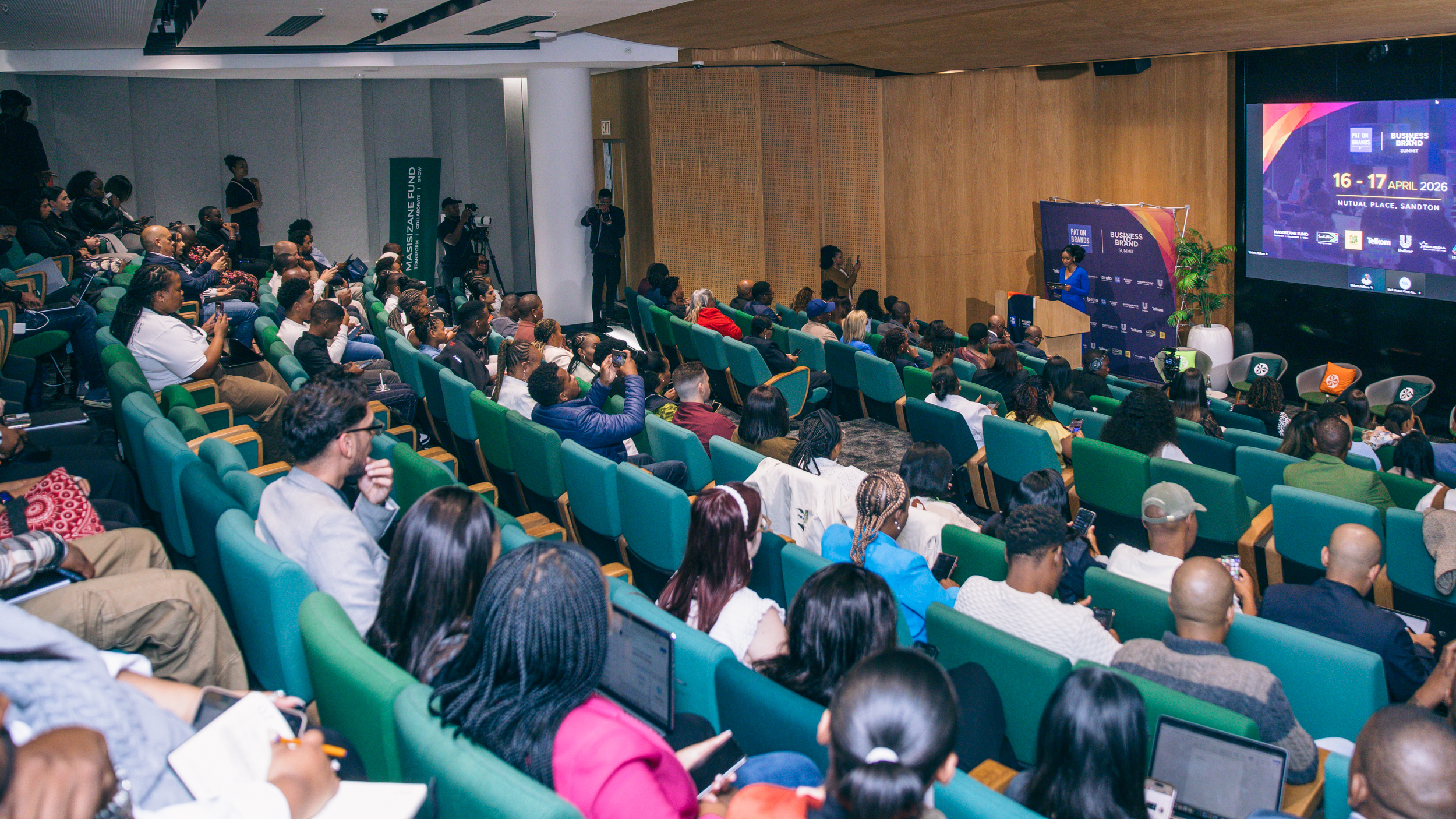
There was no shortage of ambition at the 2026 Business to Brand Summit, but beyond the speaker line-up, the executive conversations and the founder energy in the room, one message stood taller than the rest: Africa has the talent. The real question is whether that talent will be used to build great African brands.
Held under the theme Africa Rising: Building Iconic Brands for a New Era, this year’s summit brought together senior corporate leaders, marketers, entrepreneurs, founders and creatives for two days of conversation about what brand-building really requires in a changing African economy.
And if the summit proved anything, it is that brand can no longer be treated as decoration. It is strategy. It is trust. It is growth. It is commercial value. It is how businesses earn relevance in the market and credibility in the world.
Day 1 opened with a challenge to African CMOs
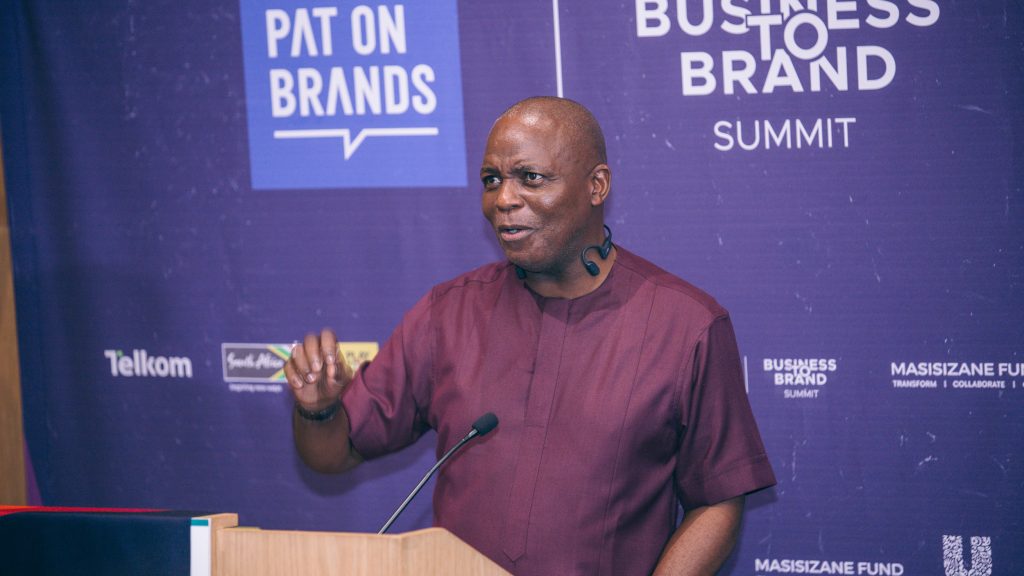
The summit’s opening keynote, delivered by Thebe Ikalafeng, immediately raised the standard of the conversation.
Thebe Ikalafeng delivering the keynote at the 2026 Business to Brand Summit
Speaking directly to the CMOs and senior marketing leaders in the room, Ikalafeng issued a challenge that was both urgent and uncomfortable: although African marketing talent is among the best in the world, nearly 80% of the brands admired by Africans are not African.
His message was not framed as criticism, but as a mandate.
“You lead the world’s most powerful brands. You carry Africa’s most important story.”
From there, he laid out a sharp and necessary call to action for African CMOs, especially those working inside global organisations.
He urged them to bring Africa’s intelligence into the room — to stop treating African identity as a background detail and instead recognise it as a strategic advantage. He called on them to advocate for Africa in global budgets, rather than accepting a token share of “rest of world” allocations. He challenged them to set a higher standard for localisation, rejecting the cosmetic localisation that gives global campaigns a local face without local intelligence, local talent or local depth. He also made the case for investing in the pipeline behind them, through mentorship, partnerships and hiring decisions that strengthen African capability. And finally, he reminded African leaders in global systems to stay connected to the continent, because Africa’s brand equity will not be built from a distance.
It was the kind of keynote that did not merely inspire the room. It confronted it.
The CEO, CFO, CMO and COO panel did what few marketing events do
One of the defining moments of Day 1 was the flagship executive panel featuring Lunga Siyo, Mosala Phillips, Lindiwe Sangweni-Siddo and ZiphoZinhle Wonci.
What made the session stand out was not only the calibre of leaders on stage, but the mix of roles represented. In a room where marketing is often expected to defend itself, the presence of a CEO, CFO, CMO and COO on one panel shifted the conversation meaningfully. This was not brand discussed in isolation. This was brand discussed in the language of business.
A key thread from the panel was that marketers must learn to speak in terms that finance, operations and executive leadership can understand. Not because creativity matters less, but because brand earns influence when it can connect to performance, trust and enterprise value.
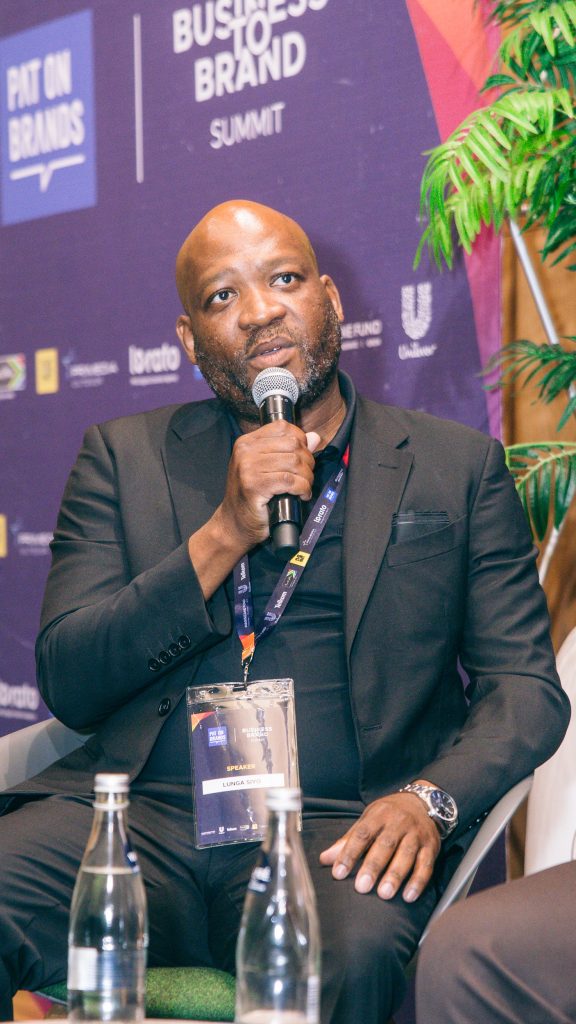
As Lunga Siyo, CEO of Telkom Consumer & Small Business, put it:
“A brand only earns credibility when the business beneath it can translate capability into performance, and performance into trust, loyalty, and commercial value.”
Lunga Siyo, Telkom CEO for Consumer and Small Business.
It was one of the most important ideas of the summit. Brand cannot be separated from business reality. A strong narrative without delivery will eventually collapse. But when capability, consistency and brand strategy work together, brand becomes a genuine asset.
Day 2 brought the conversation closer to the builder
If Day 1 focused on corporate leadership and executive accountability, Day 2 moved into the world of growth, scale and emerging brands.
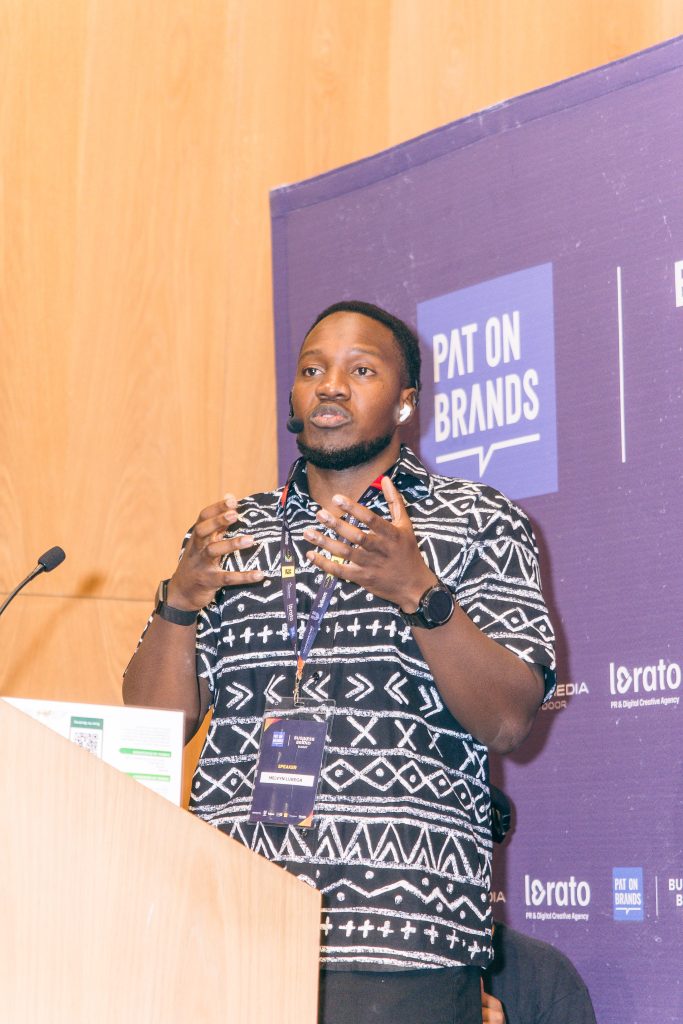
The keynote by Melvyn Lubega brought this into sharp focus. Drawing from his journey as the founder behind South Africa’s first unicorn story, Lubega spoke to the discipline required to build brands that scale. His message carried particular weight in a room filled with founders and growth-stage operators navigating the tension between ambition and sustainability.
The point was clear: building for scale requires more than visibility. It requires substance. It requires clarity. It requires the ability to create something that the market can trust, adopt and grow with.
The day also made room for a more contemporary conversation around relevance and identity through the contribution of Robot Boii, who reflected on the value of being multifaceted as a personal brand. In a time where creators, founders and public personalities often operate across industries, platforms and audiences, his perspective landed strongly. He reminded the audience that personal brand is not about reducing yourself to one thing. It is about owning the full range of what you bring, and allowing that range to become part of your power.
The Brand Clinic ended the summit where it mattered most: in practice
The summit closed with one of its most practical and engaging segments, the Pat on Brands Brand Clinic.
In a live on-stage session, two brands — Corewell and Tekkie Wash — were selected to receive a diagnosis in front of the audience. Rather than ending with abstract inspiration, the summit chose to conclude with practical intervention.
The live clinic gave both businesses direct feedback and strategic guidance from experts in attendance, while also allowing the audience to witness the process of unpacking a brand in real time — its strengths, its blind spots, its opportunities and the adjustments required for sharper positioning and growth.
It was a fitting end to a summit built on the belief that brand-building must move beyond theory. Insight matters. But application is what changes businesses.
More than a summit, a statement about where African brand-building must go
The 2026 Business to Brand Summit did more than host conversations. It made a case.
A case that Africa must take brand more seriously. A case that marketers must become stronger business translators. A case that founders must build for scale, not just attention. And a case that Africa should not only produce talent for the world’s biggest brands, but build iconic brands of its own.
That may well be the most important takeaway from this year’s summit.
Because if Africa is rising, then its brands must rise too.
ENJOYED THE READ?
Stay in the
brand conversation.
Get the latest brand news, campaigns,
opportunities and industry moves from
Pat on Brands.
We use cookies on our website to give you the most relevant experience by remembering your preferences and repeat visits. By clicking “Accept All”, you consent to the use of ALL the cookies. However, you may visit "Cookie Settings" to provide a controlled consent.
This website uses cookies to improve your experience while you navigate through the website. Out of these, the cookies that are categorized as necessary are stored on your browser as they are essential for the working of basic functionalities of the website. We also use third-party cookies that help us analyze and understand how you use this website. These cookies will be stored in your browser only with your consent. You also have the option to opt-out of these cookies. But opting out of some of these cookies may affect your browsing experience.
Necessary cookies are absolutely essential for the website to function properly. These cookies ensure basic functionalities and security features of the website, anonymously.
Cookie
Duration
Description
cookielawinfo-checkbox-analytics
11 months
This cookie is set by GDPR Cookie Consent plugin. The cookie is used to store the user consent for the cookies in the category "Analytics".
cookielawinfo-checkbox-functional
11 months
The cookie is set by GDPR cookie consent to record the user consent for the cookies in the category "Functional".
cookielawinfo-checkbox-necessary
11 months
This cookie is set by GDPR Cookie Consent plugin. The cookies is used to store the user consent for the cookies in the category "Necessary".
cookielawinfo-checkbox-others
11 months
This cookie is set by GDPR Cookie Consent plugin. The cookie is used to store the user consent for the cookies in the category "Other.
cookielawinfo-checkbox-performance
11 months
This cookie is set by GDPR Cookie Consent plugin. The cookie is used to store the user consent for the cookies in the category "Performance".
viewed_cookie_policy
11 months
The cookie is set by the GDPR Cookie Consent plugin and is used to store whether or not user has consented to the use of cookies. It does not store any personal data.
Functional cookies help to perform certain functionalities like sharing the content of the website on social media platforms, collect feedbacks, and other third-party features.
Performance cookies are used to understand and analyze the key performance indexes of the website which helps in delivering a better user experience for the visitors.
Analytical cookies are used to understand how visitors interact with the website. These cookies help provide information on metrics the number of visitors, bounce rate, traffic source, etc.
Advertisement cookies are used to provide visitors with relevant ads and marketing campaigns. These cookies track visitors across websites and collect information to provide customized ads.