A successful rebrand must change more than what customers see.
Rebranding is often reduced to a new logo, colour palette or advertising campaign. But the transition from TymeBank to GoTyme Bank demonstrates that a meaningful rebrand must connect business strategy, customer experience and future ambition.
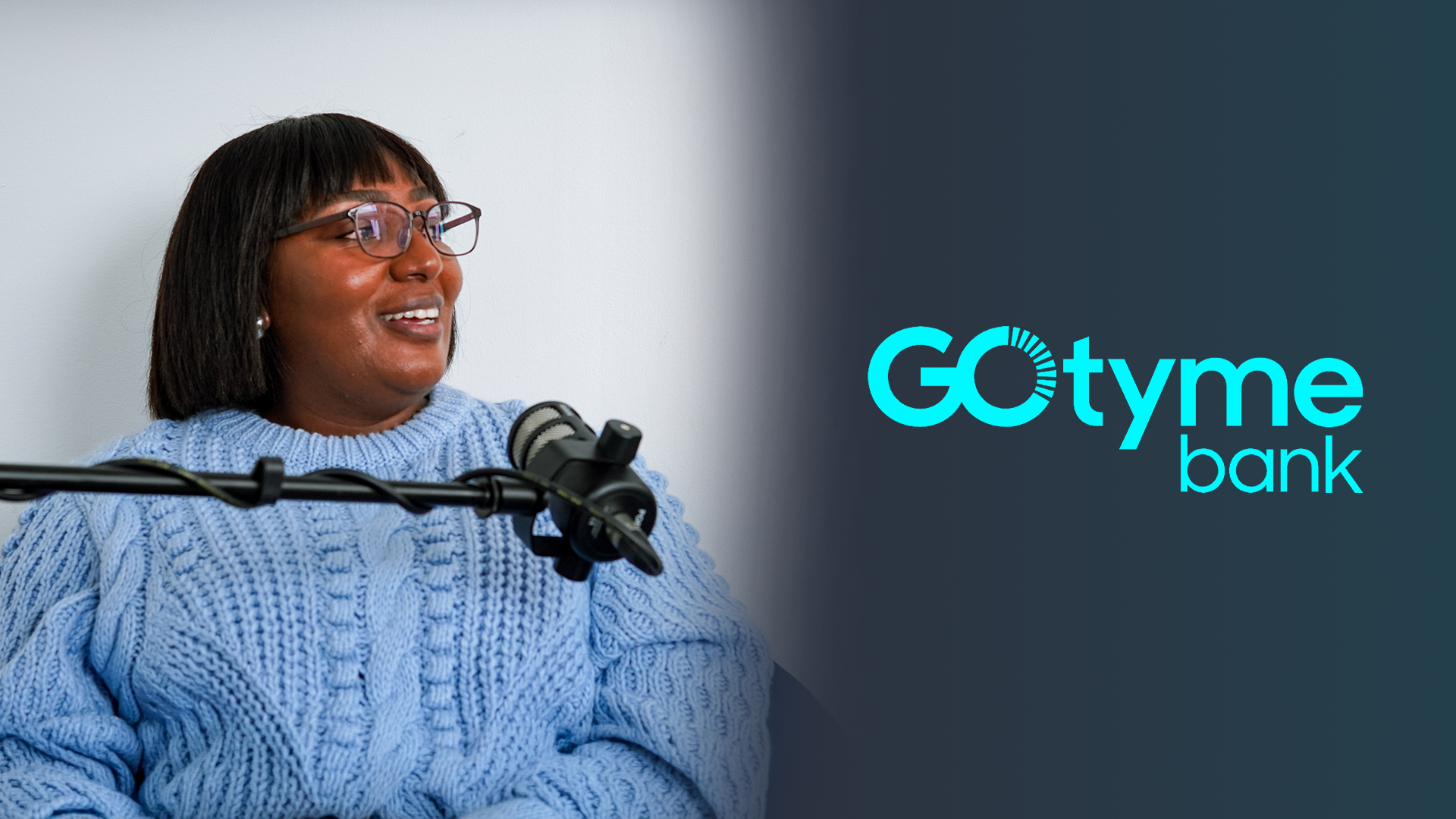
In a recent episode of the Pat on Brands Podcast, Lucia Malapane, Head of Brand at GoTyme Bank, unpacked the thinking behind the transition and the broader journey of building one of South Africa’s fastest-growing digital banks.
Launched in South Africa in 2019, the bank has grown to serve more than 12 million customers. Its new identity aligns the local business with the wider Tyme Group, which operates across several international markets and serves approximately 20 million customers globally. The transition also introduced a new app and updated digital experience while preserving customers’ existing accounts, balances and products. GoTyme Bank

Here are five important rebranding lessons businesses can draw from Malapane and the GoTyme Bank journey.
1. Rebrand for where the business is going
One of the biggest mistakes a company can make is building its identity only around what the business is today.
A strong brand must create space for future growth.
TymeBank began as a South African challenger bank with a clear proposition: make banking simpler, more accessible and more affordable. As the business grew beyond South Africa and became part of a larger international banking group, the original identity no longer captured the full scale of its ambition.
The transition to GoTyme Bank therefore represented more than a name change. It connected the South African business to a global brand system and communicated the organisation’s next phase of growth.
The lesson is simple: rebranding should be driven by business strategy, not creative fatigue.
Before changing an identity, leaders should ask:
Where is the business going?
What new markets, products or customers will it serve?
Can the current brand stretch into that future?
Does the identity reflect the scale of the company’s ambition?
If the business strategy has evolved but the brand has remained static, a gap eventually develops between how the organisation operates and how the market perceives it.
A rebrand should close that gap.

2. Protect the brand’s strategic foundations
A new identity should not erase everything that made the original brand successful.
Throughout its growth, the bank has maintained a focus on simplicity, transparency, affordability and customer empowerment. Those principles remain central to GoTyme Bank.
This is an important distinction: the expression of a brand can change without abandoning its purpose.
Customers had already developed familiarity with TymeBank. Its accessibility, retail kiosks and digital-first model helped it build a considerable customer base. Completely discarding that equity would have created unnecessary confusion and risk.
The strongest rebrands identify what must change and what must remain consistent.
The logo may change. The name may change. The app may change. But the promise customers believe in should remain recognisable.
For businesses considering a rebrand, the key question is not simply, “What should we look like now?” It is also, “What must we never lose?”
Brand heritage is an asset. Rebranding should modernise that asset rather than destroy it.

3. The product must deliver the new promise
Customers do not experience a financial brand primarily through its campaign. They experience it while opening an account, making a payment, requesting assistance or trying to recover a password.
That means product and brand cannot operate as separate worlds.
GoTyme Bank’s transition was accompanied by a new app featuring an updated interface, improved performance, stronger security and a more intuitive customer experience. The migration was phased to prioritise security, system stability and the needs of existing customers.
This is where many rebrands fall short. A company launches a compelling new identity, but the product, service and processes remain unchanged.
When the advertising says “simpler” but the customer journey remains frustrating, the rebrand becomes an unfulfilled promise.
Brand teams and product teams may approach problems differently, but both are responsible for the same customer experience. The brand defines the expectation; the product must provide the evidence.
A credible rebrand therefore needs to answer three questions:
What will customers see?
What will customers experience?
What will customers be able to do better than before?
If the last two answers remain unchanged, the business may only be redesigning its appearance.

4. Digital-first does not have to mean human-free
GoTyme Bank does not operate a traditional branch network. However, it has created a physical presence through customer hubs and self-service kiosks located in major retail environments.
This hybrid model offers an important branding lesson.
Technology can remove friction, but brands must still understand the realities of the people they serve. Not every customer wants an entirely remote relationship with their bank. Some customers value the speed of an app while still wanting access to visible, human assistance.
The customer hubs help bridge the gap between digital convenience and human reassurance.
This is especially relevant in a market such as South Africa, where consumers have different levels of digital access, financial confidence and technological literacy.
Brands should not pursue digital transformation simply because it appears innovative. They should build the combination of digital and physical experiences that best serves their customers.
Accessibility is not only about having an app. It is about making sure people can understand, trust and use the service.
For GoTyme Bank, the physical touchpoints are not necessarily branches in the traditional sense. They are part of the brand experience—places where a digital promise becomes visible and tangible.
5. Measure the rebrand through behaviour, not applause
A rebrand may attract attention on launch day, but attention alone does not make it successful.
Positive comments about the new logo are useful. They are not the final measure of brand performance.
The real indicators sit deeper in the business:
Are customers migrating successfully?
Are more people using the platform?
Has the customer experience improved?
Is brand consideration increasing?
Are customers recommending the business?
Is the brand supporting retention and revenue growth?
GoTyme Bank’s phased approach is particularly instructive. Instead of treating the launch as a single moment, the bank has continued introducing features, improving support and incorporating customer feedback.
This positions the rebrand as an ongoing business programme rather than a once-off marketing event.
Rebranding does not end when the new campaign goes live. That is when the market begins testing whether the new promise is true.
Rebranding is ultimately a business decision
The conversation with Lucia Malapane reinforces an important truth: brands are built at the intersection of strategy, product, culture and customer experience.
GoTyme Bank’s evolution reflects a business that has outgrown its original frame. The new identity connects its South African foundations to its global ambition while seeking to preserve the principles that built customer trust in the first place.
For entrepreneurs and marketing leaders, the biggest lesson is that a rebrand should never begin with the question, “What should our new logo look like?”
It should begin with a more demanding question:
Who are we becoming and what must change for customers to believe us?
Watch the full conversation with Lucia Malapane on the Pat on Brands Podcast.
Frequently Asked Questions
Quick answers about Lucia Malapane, GoTyme Bank’s rebrand, brand strategy,
customer experience, digital banking and the lessons businesses can learn
from the transition from TymeBank to GoTyme Bank.
Who is Lucia Malapane?
conversation, she discusses the bank’s rebrand, brand strategy, customer
experience and the thinking behind the transition from TymeBank to GoTyme Bank.
Why did TymeBank rebrand to GoTyme Bank?
the wider Tyme Group and its international growth ambitions. The rebrand was
therefore about more than changing the bank’s name or visual identity.
What can businesses learn from the GoTyme Bank rebrand?
strategy. Companies should consider where they are going, who they want to serve
and whether their existing brand can support their future ambitions.
Did GoTyme Bank completely abandon the TymeBank brand?
the business, including simplicity, transparency, affordability and customer
empowerment. The rebrand changed the expression of the brand while seeking to
preserve the principles that helped build customer trust.
Why is customer experience important during a rebrand?
A successful rebrand therefore needs to be reflected in the customer journey,
digital platforms, support systems and the overall experience people have with
the business.
What role did the new GoTyme Bank app play in the rebrand?
app interface, improved performance, stronger security and a more intuitive
customer experience. This demonstrates how a brand promise needs to be supported
by the actual product.
Does digital-first banking mean customers no longer need human interaction?
hubs and kiosks in retail environments. This creates a hybrid experience that
combines digital convenience with access to human assistance where customers
may need it.
How should businesses measure whether a rebrand is successful?
behaviour. Important indicators can include customer adoption, customer experience,
brand consideration, recommendations, retention and business performance.
What is the biggest mistake companies make when rebranding?
colour palette or campaign cannot fix problems with the product, customer
experience or business strategy. A meaningful rebrand needs to connect all
of these areas.
What is the key lesson from the TymeBank to GoTyme Bank transition?
what needs to change for customers to believe that new promise. Branding,
strategy, product and customer experience need to work together.
Watch the Full Episode
Want to hear Lucia Malapane unpack the GoTyme Bank rebrand in her own words?
Watch the full Pat On Brands Podcast conversation covering brand strategy,
customer experience, digital banking, rebranding and the future of the brand.