Artificial intelligence is no longer just helping marketers write copy or automate customer service. It is now stepping into the role of an active creative partner.
With the launch of Muse Image, Meta’s first image generation model from Meta Superintelligence Labs, the company is moving beyond AI chat assistants and into creative production.
Integrated directly into Meta AI, Muse Image allows users to generate, edit, and customize visuals using natural language prompts, while seamlessly sharing them across Facebook, Instagram, and WhatsApp.
While the announcement introduces several new AI-powered features, the bigger story lies in what Muse Image could mean for digital marketing agencies and Instagram creators, who are under increasing pressure to produce high-quality content at speed.
Content Creation Becomes More Accessible
Muse Image isn’t just another AI tool entering a crowded market. It signals a shift: generative AI is embedding itself directly into the platforms where brands already create, publish, and engage with audiences.
Instead of spending hours creating multiple visual concepts for client presentations or social campaigns, agencies can generate campaign mock-ups using simple conversational prompts. Whether brainstorming creative directions for a product launch or producing social assets for different audience segments, teams can move from concept to visual much faster.
Muse Image offers agencies a way to meet that demand without compromising quality; it removes repetitive production tasks, allowing creative professionals to focus on what matters most.
For smaller agencies and in-house marketing teams with limited resources, this could also make professional-quality content more accessible without significantly increasing production costs.
Is AI Becoming a Creative Assistant for Agencies, Not Just a Tool
Muse Image signals a shift in how marketers interact with AI. One of Muse Image’s standout features is its ability to interpret prompts intelligently before generating visuals.
Rather than simply generating an image from a prompt, Meta says the model first plans the composition, blends multiple visual references, and uses contextual reasoning to produce more accurate results. It can also generate legible text within graphics, making it easier to create promotional posters, instructional visuals, event announcements, and social media infographics.
This transforms AI from a simple design tool into a creative assistant capable of supporting brainstorming, concept development, and early-stage campaign planning.
One of Muse Image’s most notable differentiators is that it doesn’t simply generate an image. Powered by Muse Spark, the model plans layouts, references real-time web context and intelligently combines multiple visual elements before producing the final image.
Whether creating a personalized travel postcard, placing a pet inside a famous painting or combining several reference photos into a single composition, the AI is designed to understand the creative objective rather than simply execute a prompt.
For marketers and creators alike, this could result in visuals that require fewer revisions and better align with campaign objectives.
What This Means for Instagram Creators
Instagram creators have long balanced creativity with consistency. The pressure to produce engaging Reels, eye-catching Stories, and polished visuals daily has made content creation both time-consuming and competitive.
Rather than relying on multiple third-party editing applications, creators can generate, edit and customize visuals directly within Meta’s ecosystem before sharing them with their followers.
Meta has also introduced more than 30 AI-powered effects for Instagram Stories, giving creators new ways to experiment with content while keeping production fast and accessible.\
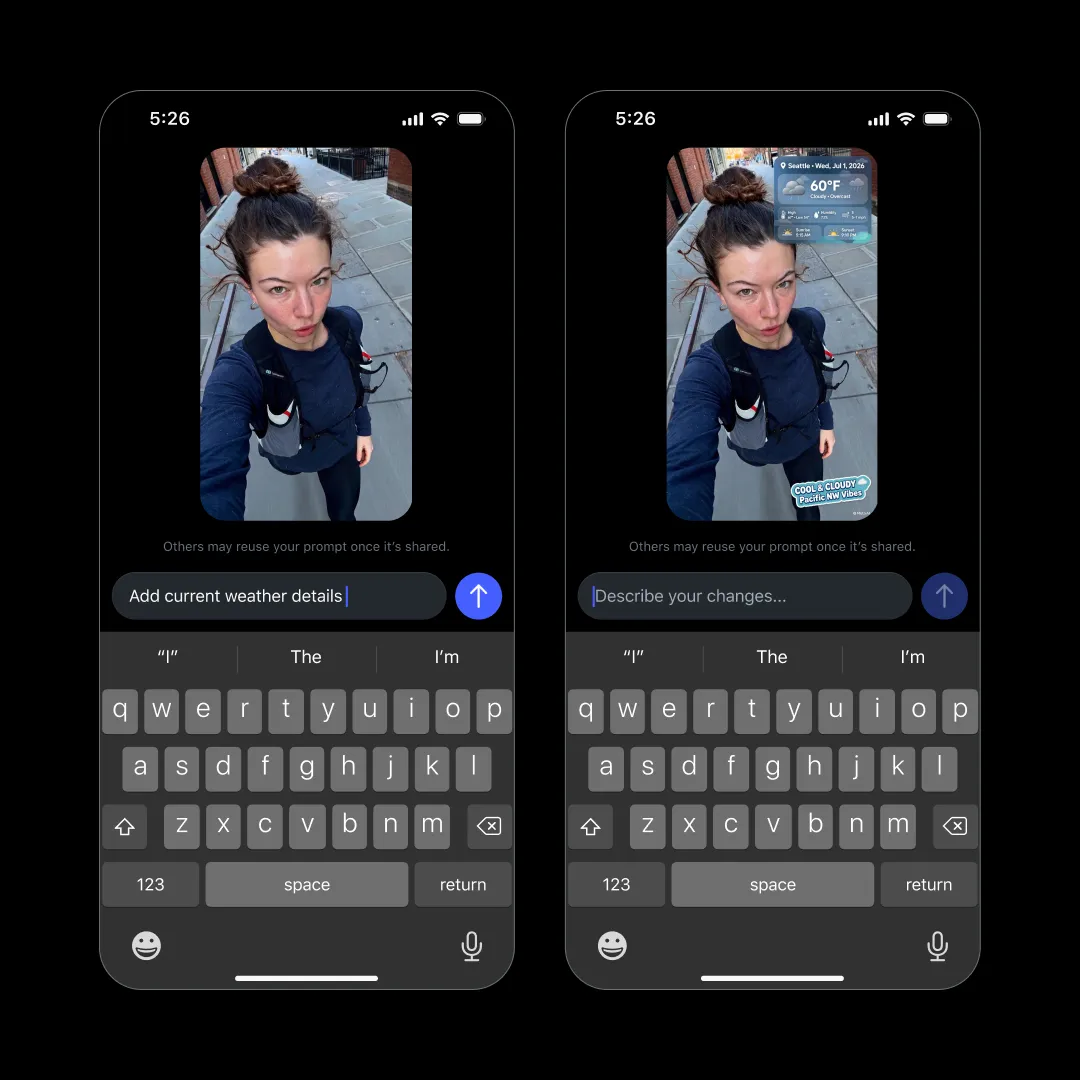
One of the platform’s more interesting additions is the ability to @mention Instagram accounts within the Meta AI app. By tagging a public Instagram profile, users can generate personalized visuals using publicly available photos—whether that’s creating a collaborative campaign concept, designing a custom event invitation or producing branded creative content.
Importantly, Meta says users remain in control of this feature, with the option to disable AI tagging through their privacy settings.
For creators working with brands, these tools could speed up campaign production, simplify content collaboration, and make it easier to test multiple creative concepts before publishing.
Authenticity Will Become Even More Valuable
As AI tools become more deeply integrated into social platforms, producing content quickly will become easier than ever.
The real competitive advantage, however, will not come from using AI alone.
Successful brands and creators will continue to differentiate themselves through strategic thinking, authentic storytelling and a deep understanding of their audiences. AI can generate impressive visuals, but it cannot replace original ideas, cultural relevance or the emotional connection that defines memorable campaigns.
Muse Image reflects a broader trend in digital marketing: AI is becoming embedded in the platforms where brands already engage with consumers.
Read more: Meta’s Platforms Add R16.5 Billion to South Africa’s Economy