Tell us about your brand. What problem are you trying to solve?
One of the things that my mentor told me to do when I was about to become a mother for the first time is to create a vision board of what I wanted motherhood to look and feel like. This was so important for both my husband and I since we really enjoyed our lives as DINKs. I knew that I wanted babies, but I knew that I didn’t want to lose the parts of my identity that I really valued. Part of that was being stylish, my confidence and feeling good about myself- as a mother. I also didn’t want parenthood to mean the end of my dreams and goals as an individual. My husband and I coined this phrase: “I want to live with my babies, not for them”. This was freeing, as it meant I could enjoy life, chase my dreams and be stylish whilst being a mom. Life with my children could be integrated. LOURO is an expression of this. It is about navigating major transitions, it was parenthood for us but could be something different for someone else, whilst keeping the attributes that make you feel good about yourself.
Parenthood without losing your identity is less about holding on to a version of yourself which no longer suits your new lifestyle. But about understanding the parts of your identity that made you feel good about yourself. Your confidence, your sense of style. And your drive for excellence and the finer things in life. That is why we created staples which can blend and evolve with you as you define what the “new you” looks like as a parent. My hope is that LOURO makes mothers (especially) feel like they can still be “that girl” even as parents.
Where did the idea come from?
During my maternity leave with both my babies, I enjoyed going out for brunch with friends or joining a community of new mothers who met once a week. As a new mom, it was great to be out and start socialising with adults again once I could. What I noticed was how the “baby bag” which I had to carry in these outings was actually not for the baby at all, but for the parent who uses it. However, most bags in the market are styled and designed as though the baby would be using them.
The bags available felt like you had to sacrifice your identity. They were either very utilitarian baby bags, or extremely feminine, or just not something you’d want to carry into a meeting or a dinner.
My husband and I felt there was a gap for a bag that respected both parts of your identity. The parent and the ambitious professional.
So LOURO was born out of this simple idea: what if parenting gear didn’t make you feel like you’d lost yourself?
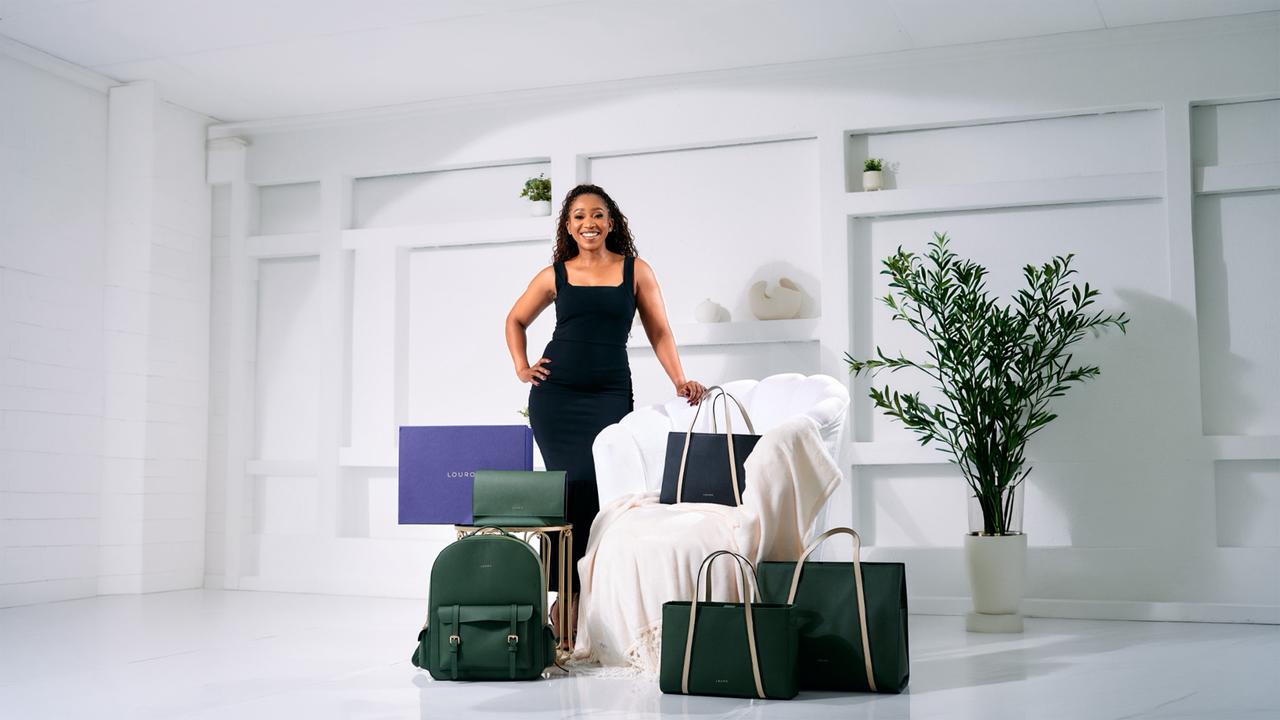
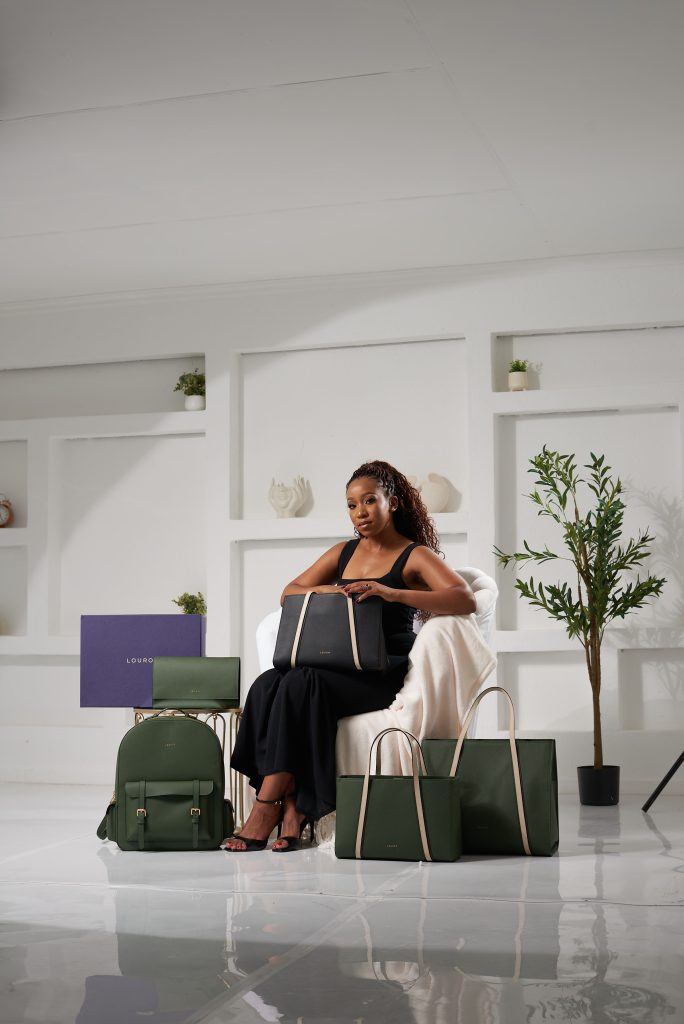
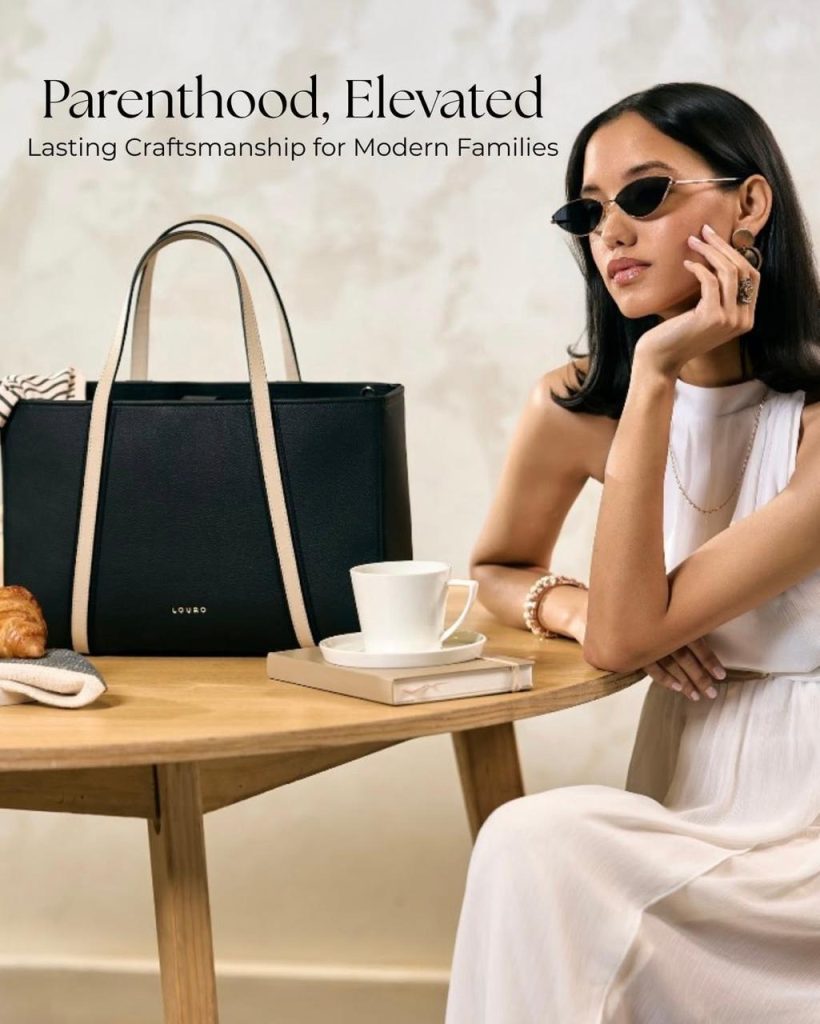
We designed a bag that works for parenting, but still feels like something you’d proudly carry into a boardroom, onto a plane, or to a weekend brunch.
The Brand Strategy
Who is your target market – and what insight unlocked growth for you?
This brand is for South African parents. South African parents today are not shrinking. They are building careers, businesses, ministries, communities, while raising families with intention. They are global in outlook but deeply local in identity.
LOURO reflects that duality.
It is designed for the parent who refuses to choose between ambition and presence. The executive who leaves a boardroom and goes to a school play. The creative who builds something meaningful while raising children who will inherit a complex world.
South African parents today are resilient, aspirational and quietly powerful. LOURO mirrors that energy: structured, refined and capable, without losing warmth or humanity.
Local luxury brands are critical in shaping how a nation sees itself. For too long, luxury has been associated with Europe or the US. When a South African brand produces something world-class, it shifts the narrative from “we consume global excellence” to “we create global excellence.” That builds cultural confidence.
It tells our children that craftsmanship, innovation and sophistication exist here, not somewhere else. It affirms that our standards can compete internationally without imitation. Local luxury isn’t just commerce. It’s cultural positioning. Having lived in the USA for a few years, I noticed that the country is prominent globally because of the power of the brands it exports. Building a local brand with significance globally is really the ambition for me.
As a result, crafting LOURO locally is about more than geography. It’s about capability. South Africa has exceptional artisans, leather suppliers and manufacturing skill. When we produce locally, we are investing in that ecosystem and proving that precision and refinement live here.
It also allows us to protect quality at every stage, from material selection to final inspection.
For us, local production isn’t a marketing angle. It’s a statement of belief in South African excellence.
How intentional are you with brand positioning, identity and storytelling?
We actually did thorough research on the type of materials we wanted to use in crafting the entire bag. We wanted to choose an external material that consisted of the highest quality grade when it came to luxury, but would accommodate the lifestyle of a busy parent in terms of durability. For the interior we wanted a soft feeling material that would feel good to the touch, and be wipeable. We managed to achieve both without compromising the style of the bags which took several iterations over months. We believe that the best quality is worth the wait and effort.
We also wanted to ensure that the stitching and accessories are of the highest quality. What we managed to achieve is second to none in terms of luxury and practicality. This makes a LOURO bag a luxury staple that you can keep in your closet for years after your children have grown. The style, craftsmanship and quality make the pieces invaluable.
What was the hardest part about starting?
The hardest part was moving from an idea to a real product.
Luxury products demand a lot more precision: the leather, the hardware, the stitching, the proportions. Getting all those details right took a lot of iteration.
We also made the decision early on to manufacture locally in South Africa, which we’re incredibly proud of, but it does add complexity when you’re starting from scratch.
So the challenge was balancing three things at once:
- creating a beautiful product
- building reliable local manufacturing
- and launching a brand people had never heard of before.
But that process also shaped our standards from the very beginning.
Traction and Growth
What milestones made you realise, “We’re on to something here…”
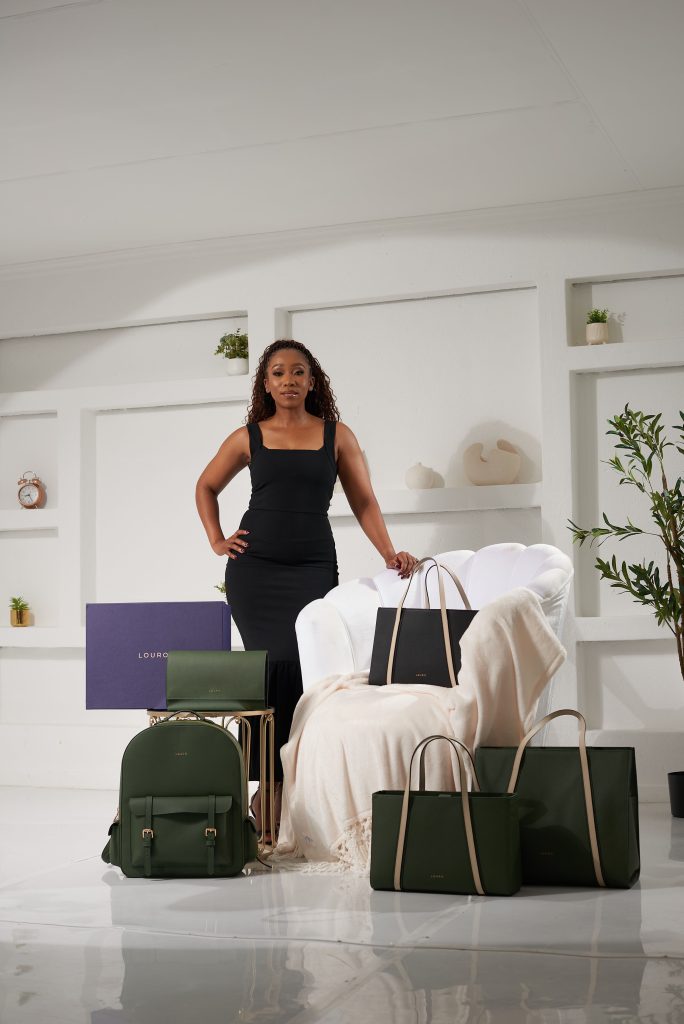
The first signal was actually very simple: people noticing the bag without us saying anything. I carried the first prototype to the community of new moms group and one of the moms googled the brand just from seeing me carrying it.
This then led to our early sales as once the prototypes were perfected, we started getting sales from some of my friends and family members who just saw the bag and loved it.
When people touched the leather, the reaction was always the same: “Wow, this feels incredible.”
Another moment was when people who didn’t even have babies said they wanted the bag anyway. That told us we weren’t just building a baby bag: we were building a lifestyle product.
Those organic reactions leading to early sales gave us confidence we were on to something.
How have you funded your business and scaled so far?
So far, LOURO has been self-funded.
We started deliberately small, designing the product carefully, producing limited batches, and focusing on building brand credibility rather than chasing volume immediately.
That approach allows us to stay disciplined with quality and brand positioning while we learn directly from our early customers.
For us, the goal isn’t fast growth at any cost; it’s building something that can endure.
What has been your most effective marketing channel?
The most powerful channel so far has been physical touchpoints.
Because LOURO is a leather product, once someone touches the bag and feels the craftsmanship, the brand story clicks immediately.
So events, high-trust gatherings, and word of mouth have been incredibly effective for us.
Social media and digital marketing are important, but our strongest conversions come when someone experiences the bag in person.
That’s been a big insight for us.
Leadership & Lessons
What has entrepreneurship taught you about yourself?
Entrepreneurship has taught me to appreciate a slower pace. Especially coming from a high pace environment like tech where speed is everything.
When you build something meaningful, progress often happens slower than you expect. But the learning compounds. Especially when you use the time in between to reflect, listen and dig deep into the well of creativity.
It’s also taught me to trust my instincts more. As founders, we often see something before the market fully does.
You have to hold that vision long enough for others to see it too.
What mistake shaped your growth the most?
One lesson we learned early is that a product alone doesn’t sell itself.
You can design something beautiful, but if you don’t tell the story clearly, why it exists, who it’s for, people won’t fully understand the value.
So we’ve become much more intentional about storytelling and brand communication.
That’s been a big growth moment for us.
What systems or habits keep you disciplined?
We keep things simple but consistent:
Weekly product and customer feedback reviews to stay aligned with real needs
Tight control over production quantities to maintain quality and exclusivity
Constant refinement of the brand story to ensure it resonates with our audience
On a personal level, we make it a priority to stay close to our customers. Observing how people use the bag in real life provides insights far more valuable than any spreadsheet.
Culture & Community
How do you ensure your brand stays culturally relevant?
Having worked in Retail e-commerce for the past 5 years, I know that South African consumers reward brands that see them and respect their needs. We want to create a brand that is not only culturally relevant but is built in the foundations of retail excellence, regardless of the channel.
We want to be part of the conversation around modern parenthood and identity. Parenthood should not mean erasing who you were. It should mean expanding who you are. We want to challenge the idea that ambition and nurturing are opposites. We also want to contribute to the broader conversation about African luxury; what it looks like, how it feels and how it competes globally without losing its roots.
If LOURO can help redefine what strength, sophistication and parenthood look like in Africa, then we are doing more than making bags, we are shaping narrative.
The Business of Brand
What does profitability look like for you right now?
For us, profitability is about healthy unit economics rather than rapid scale. From my experience in tech, I’ve learned that strong unit economics are an early indicator of a business that can sustainably grow.
Every bag needs to make sense on its own; from production cost to pricing to margins. This discipline allows us to expand thoughtfully, rather than chasing volume that could compromise the brand.
What metrics do you obsess over?
Right now, we focus on three key indicators:
Customer reaction – especially first impressions when someone touches the bag.
Conversion after physical interaction – how the experience translates into sales.
Repeat interest and referrals – whether customers are sharing the brand with others.
If people are talking about LOURO and recommending it, we know we’re building something meaningful.
Are you building for acquisition, legacy, or lifestyle?
Our vision is to build a global South African brand that parents are proud to carry. By focusing on authenticity, craftsmanship, and cultural relevance, opportunities naturally follow—whether partnerships, expansion, or even acquisition.
But for now, our focus is simple: create a brand that deserves to exist for decades.