By Bogosi Motshegwa, Chief Strategy Officer and Founder of Thinkerneur
The KFC Make Room For More campaign is more than another advertisement designed to sell chicken. It is a powerful example of how brands can use storytelling to reflect the realities of South African families while encouraging a more positive conversation about relationships, parenting and belonging. At a time when humour dominates much of the advertising landscape, KFC has chosen to tell a story that connects with audiences through empathy, patience and the importance of family.
Advertising is ultimately expected to sell products, but the most meaningful campaigns can achieve more than commercial objectives. They can reflect society, challenge familiar narratives and encourage people to see everyday experiences differently. KFC’s approach combines its product message with a story about family relationships, demonstrating how brand communication can be commercially relevant without losing its human connection.
What makes this campaign particularly important is its portrayal of a stepfather attempting to build a relationship with a child who struggles to accept him. Rather than relying entirely on comedy or exaggerated entertainment, the advertisement explores an emotional reality that many South African households may recognise. It offers a reminder that advertising can inspire connection while still fulfilling its responsibility to promote a brand.

KFC Make Room For More Challenges Advertising’s Obsession With Humour
Humour has become one of the most visible creative approaches in advertising, with many brands choosing comedy to capture attention and entertain audiences. This is understandable, particularly when consumers are dealing with financial pressures, uncertainty and the challenges of everyday life. Laughter provides relief, and well-executed humorous advertising can create memorable connections between brands and their audiences.
However, the industry’s growing reliance on humour raises an important creative question: should every brand be trying to make people laugh? Advertising has a much wider emotional range available to it, including empathy, hope, nostalgia, belonging and inspiration. When brands repeatedly pursue the same creative territory, they risk overlooking opportunities to connect with consumers through experiences that are equally meaningful.
The KFC Make Room For More campaign demonstrates why brands should consider the full range of human emotions when developing their creative strategies. Rather than treating entertainment as the only route to consumer attention, the advertisement uses a relatable family story to build emotional relevance. It reminds marketers that effective advertising begins with understanding people, not simply following the latest creative trend.
How KFC Make Room For More Reflects South African Family Dynamics
South African families exist in many different forms, shaped by relationships, economic circumstances, cultural expectations and personal experiences. In some households, children grow up with both biological parents, while others are raised by single parents, grandparents, extended family members or adults who take on parenting responsibilities later in life. These different family structures are an important part of the country’s social reality.
The original commentary draws attention to Statistics South Africa figures concerning children who do not live with their biological fathers. While these figures require careful interpretation, they highlight why conversations about parental presence, caregiving and family relationships remain relevant. Importantly, living apart from a biological parent does not automatically mean that a child has a stepparent or that the absent parent is uninvolved.
Against this background, the campaign explores the challenges that can arise when a new parental figure enters an existing family. Social media discussions sometimes portray stepparenting negatively, particularly when men are discouraged from raising children who are not biologically theirs. Such narratives can overlook the patience, emotional commitment and responsibility involved in building relationships within blended families.
By telling a story about a stepfather seeking acceptance, KFC introduces a more constructive perspective. The advertisement does not suggest that these relationships are easy or that every family experiences the same challenges. Instead, it shows how consistent care and thoughtful actions can create opportunities for trust to develop over time.
KFC Make Room For More Tells a Story About Patience and Acceptance
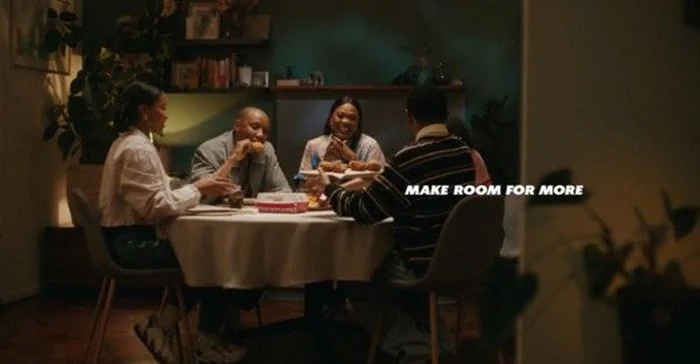
At the centre of the advertisement is Jonasi, a father figure attempting to establish a meaningful relationship with his partner’s son. The young boy initially struggles to accept him, creating emotional tension that drives the story. His resistance appears connected to feelings about his biological father, although the advertisement does not clearly establish the full circumstances of that relationship.
What makes Jonasi’s character compelling is his response to rejection. Rather than demanding acceptance or attempting to replace the child’s biological father, he remains patient and looks for opportunities to demonstrate that he wants to contribute positively to the family. His actions communicate a willingness to build trust gradually, even when that process involves discomfort and uncertainty.
The turning point arrives through a shared moment involving KFC chicken, when the child extends a gesture of acceptance. Although the product plays an important role in the scene, its significance goes beyond the meal itself. It becomes a symbol of connection, showing how a simple everyday experience can create space for a relationship to grow.
This is where the campaign’s storytelling becomes particularly effective. The brand is not positioned as a magical solution to complicated family relationships. Instead, the product is woven into an emotional moment that already carries meaning, allowing the commercial message to emerge naturally from the narrative.
Why the Make Room For More Family Story Matters
One of the campaign’s strongest qualities is its portrayal of a Black South African family navigating a sensitive relationship with care and emotional honesty. Jonasi is presented as a committed and patient father figure who remains willing to build a relationship despite repeated rejection. His character challenges the assumption that stepparenting must always be defined by conflict or resentment.
The advertisement also highlights the importance of recognising the emotional experiences of children within blended families. A child’s hesitation to accept a new parental figure may reflect grief, loyalty, uncertainty or fear of losing an existing connection. Building trust therefore requires more than good intentions; it demands patience, understanding and a willingness to respect the child’s feelings.
In many South African communities, caregiving responsibilities extend beyond biological parenthood, with extended family members and other trusted adults playing important roles in raising children. The campaign’s message resonates with this broader understanding of family, where commitment and care can be just as important as biological relationships.
Rather than presenting a perfect family without challenges, KFC offers a hopeful example of people working towards connection. That distinction matters because meaningful representation should acknowledge difficulties while also showing that healthier relationships are possible.
KFC Make Room For More Shows Why Emotional Advertising Works
The campaign illustrates how emotional storytelling can strengthen brand communication without relying entirely on humour. While comedy remains a valuable creative tool, it is not the only way to entertain audiences or make advertising memorable. Stories that evoke empathy, recognition and hope can also capture attention while creating deeper associations with a brand.
KFC uses light-hearted moments within a narrative that addresses a serious subject. This balance allows the advertisement to remain accessible without reducing family challenges to a joke. The humour supports the story rather than becoming the story itself, giving the emotional journey enough space to develop.
For advertising professionals, the lesson is that creative decisions should be guided by the audience, the brand and the message being communicated. Some campaigns benefit from humour, while others require a more reflective or emotionally grounded approach. When every brand adopts the same creative formula, advertising risks becoming predictable and disconnected from the diverse experiences of consumers.
The strength of KFC’s execution lies in its ability to connect a familiar product with an emotionally relevant moment. The meal remains central to the advertisement, but the meaning attached to it makes the story more memorable than a straightforward product demonstration.
What KFC Make Room For More Teaches Brands About Social Impact
The KFC Make Room For More campaign raises an important question about the role of advertising in society. Should brands focus exclusively on selling products, or can they also contribute to more constructive conversations about the communities they serve? While advertising cannot resolve complex social challenges on its own, it can influence which stories receive attention and how those stories are presented.
KFC’s family-centred narrative offers an example of how commercial storytelling can reflect social realities while encouraging a hopeful perspective. By showing a patient father figure working towards acceptance, the advertisement challenges negative assumptions about blended families and creates room for a different conversation about responsibility, belonging and care.
The original commentary also points to KFC’s wider efforts to communicate its impact on employees, partners and communities. Those initiatives form part of a broader discussion about responsible business, although the effectiveness of any company’s social impact commitments should ultimately be assessed through measurable outcomes rather than advertising messages alone.
This distinction is important for marketers. A campaign can create emotional resonance and contribute positively to cultural conversations, but its wider impact cannot be assumed simply because the message is meaningful. The opportunity for brands is to connect compelling storytelling with actions that demonstrate their values beyond the screen.
Why South African Advertising Needs More Campaigns Like This
South African consumers face a wide range of social and economic pressures, and advertising often responds by offering entertainment and escapism. There is nothing inherently wrong with that approach. Humour can be powerful, particularly when it reflects local culture and gives audiences a welcome moment of relief from everyday challenges.
However, brands should not overlook the opportunity to tell stories that encourage empathy, understanding and more constructive social attitudes. Advertising influences the images, relationships and aspirations that audiences encounter, making representation an important part of the creative process.
The KFC Make Room For More campaign demonstrates that a commercial message can coexist with a thoughtful portrayal of family life. Its strength is not that it offers a complete solution to the challenges of stepparenting, but that it presents patience, acceptance and emotional commitment as qualities worth celebrating.
For South African marketers, this is an important reminder that cultural relevance goes beyond using familiar humour, language or personalities. It also requires understanding the relationships, pressures and hopes that shape people’s lives. Campaigns that recognise these experiences have an opportunity to connect with audiences in ways that feel more personal and meaningful.
Ultimately, KFC Make Room For More shows that advertising can sell a product while still contributing something valuable to the wider conversation. By making room for empathy, belonging and family connection, KFC has created a campaign that offers more than a meal. It offers a story about the kind of relationships and communities South Africans can continue working towards building.
KFC has previously connected its Streetwise offering to initiatives supporting South African families. Earlier in 2026, Pat on Brands reported on the KFC Streetwise Originals Start Strong campaign, which offered education-related support to learners and students. While the two campaigns have different objectives, they demonstrate how KFC has used its Streetwise platform to engage with issues affecting local households.
Watch the campaign: KFC Make Room For More on YouTube
This article is an opinion and brand analysis by Bogosi Motshegwa, Chief Strategy Officer and Founder of Thinkerneur. The views expressed are those of the author.