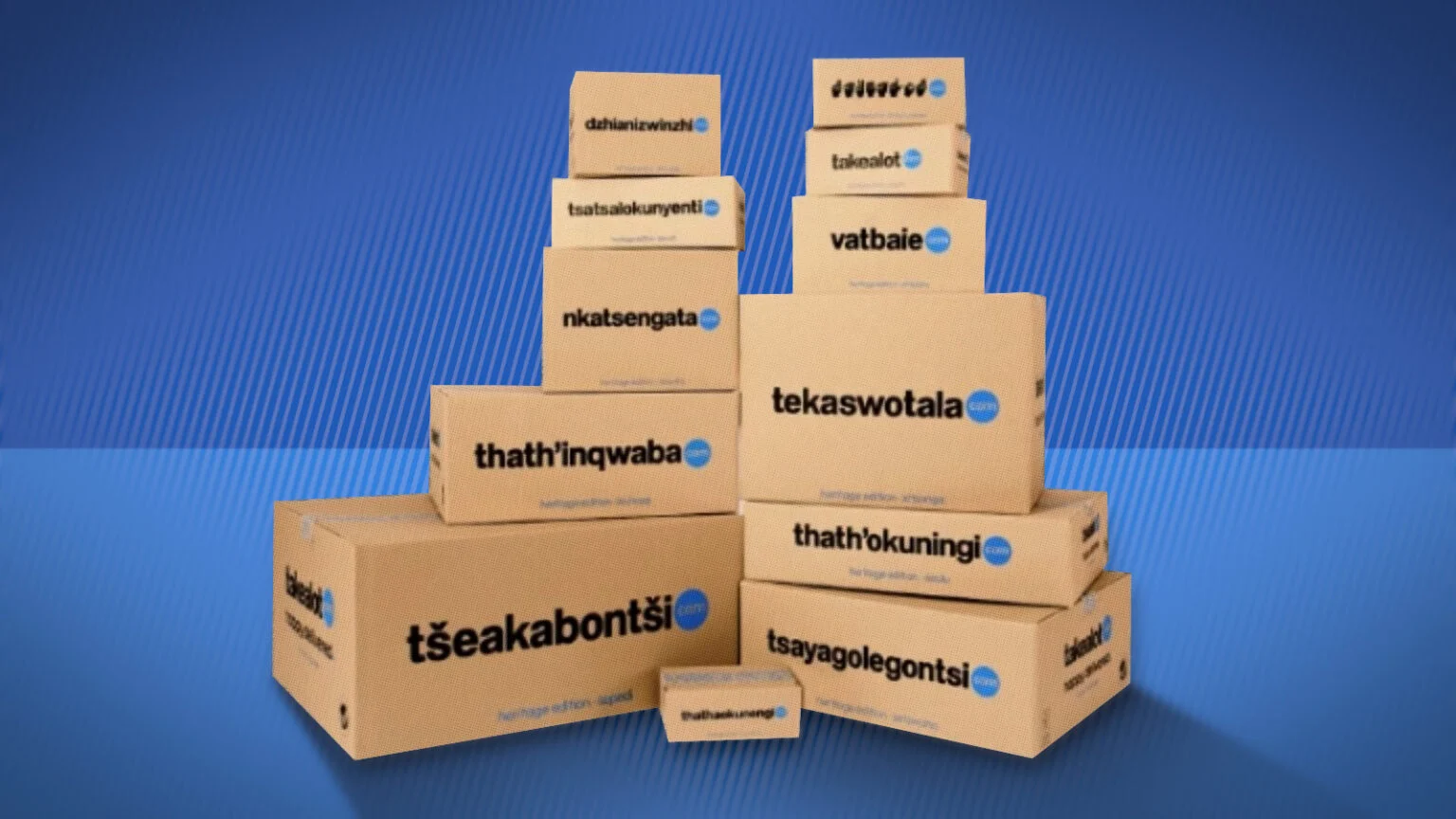
Takealot changes its name for Heritage Month, replacing the familiar name on its delivery boxes with translations inspired by South Africa’s 12 official languages. The temporary campaign is turning one of the country’s most recognisable e-commerce brands into a celebration of language, culture and identity.
For the first time in its 15-year history, Takealot is changing the name printed on its iconic delivery boxes.
But there is an important distinction: Takealot changes its name only as part of its Heritage Month campaign. This is not a permanent corporate rebrand.
Throughout September, customers across South Africa will receive Takealot parcels featuring different versions of the brand name translated into the country’s official languages.
And while changing a company’s name might normally signal a major business transformation, Takealot is using the idea differently.
The brand is temporarily changing one of its most recognisable assets to celebrate the people, languages and cultures that make up its customer base.
Why Takealot Changes Its Name for Heritage Month
Takealot has used its familiar name on delivery boxes for years, making the packaging instantly recognisable to millions of South Africans.
This September, however, those boxes are carrying names such as Vatbaie, Tsayagolegontsi and Thath’okuningi, alongside other translations representing South Africa’s official languages.
According to Takealot, the campaign is designed to celebrate the country’s people, cultures and shared identity.
That makes the packaging itself part of the storytelling.
Instead of simply publishing a Heritage Month message online, Takealot has taken the campaign into the physical world — directly to customers’ homes.
Takealot Changes Its Name — But Not Its Brand
One of the most interesting aspects of the campaign is that Takealot changes its name without actually changing the company.
The retailer remains Takealot.
Its products, website, delivery services and customer experience remain in place.
What changes is the way the brand presents itself on its delivery boxes.
This distinction is important because modern branding is not always about completely changing an identity.
Sometimes, it is about finding new ways to express an established identity.
For Takealot, the delivery box provides exactly that opportunity.
From Takealot to Different Names Across South Africa
The campaign means that customers may encounter different versions of the Takealot name depending on the language being represented.
Takealot says the different names are connected to South Africa’s 12 official languages and are intended to celebrate the diversity of the communities that have helped shape the brand.
The company has also launched digital experiences where people can explore the different versions of the Takealot name, hear their pronunciations and learn more about South Africa’s official languages.
That gives the campaign a life beyond the physical delivery box.
The box catches your attention.
The digital experience gives people an opportunity to explore the idea further.
Why the Takealot Delivery Box Matters
For an online retailer, packaging is more than a way of transporting an order.
It is part of the customer’s experience.
A Takealot box can travel from a fulfilment centre to a neighbourhood, a home, an office or a pickup point. That makes it a highly visible physical representation of a digital brand.
By changing the name printed on that box, Takealot is effectively turning its packaging into advertising.
But instead of advertising a product or promotion, the box communicates something about South Africa.
This is where Takealot changes its name becomes an interesting branding case study.
The company has taken something ordinary and familiar and given it a new meaning for a limited period.
Takealot Changes Its Name as Part of a Bigger Heritage Campaign
The name change is not happening on its own.
Takealot is also bringing back its Heritage Design Challenge, which is now in its fifth year.
The competition invites South Africans to create a limited-edition Takealot delivery box inspired by what heritage means to them.
The winning design is set to appear on one million Takealot boxes during the festive season.
The winner will receive R100,000 in Takealot vouchers, while a charity selected by the winner will receive a R10,000 Takealot voucher.
This gives the public a role in shaping the brand’s visual identity.
Rather than simply telling customers what heritage means, Takealot is inviting South Africans to interpret it themselves.
Takealot Brings Music Into the Conversation
Takealot has also partnered with South African electronic music producer and artist Muzi as part of the campaign.
The collaboration explores local music genres including lekompo, Maskandi, Kwaito and Kaapstad hip hop and looks at how South African sounds have developed and reached audiences beyond the country’s borders.
This adds another layer to the campaign.
The story is no longer just about a different name appearing on a cardboard box.
It becomes a wider conversation about language, music, creativity and the different ways South Africans experience their heritage.
Takealot Changes Its Name Without Losing Its Identity
There is an important branding lesson in what Takealot is doing.
A company does not necessarily need to abandon its identity to make a campaign feel culturally relevant.
Takealot has spent years building recognition around its name and visual identity.
Rather than replacing that identity permanently, the company is temporarily adapting one element of it.
That allows the brand to remain familiar while giving customers something unexpected.
For a major retailer, that can be a powerful combination.
Familiar enough to recognise. Different enough to notice.
What Takealot’s Name Change Says About Modern Branding
The campaign also reflects a wider shift in how brands approach cultural moments.
Consumers are exposed to marketing messages constantly.
A standard social media post saying “Happy Heritage Month” can easily disappear among thousands of other posts.
A delivery box arriving at someone’s home with a completely different version of a familiar brand name is harder to ignore.
That is what makes the idea interesting.
Takealot has connected the campaign to something people already interact with.
It has not created an entirely separate Heritage Month product.
It has adapted an existing part of the customer journey.
Takealot Is Making Heritage Part of the Customer Experience
The strongest part of the campaign may ultimately be its simplicity.
Takealot delivers products to millions of South Africans.
Those deliveries already form part of people’s everyday lives.
By changing the name on the box, the company is making Heritage Month part of that everyday experience.
The campaign also reflects Takealot’s broader South African positioning. The company says it launched in Cape Town in 2011 and has since expanded across the country, while its marketplace has enabled thousands of businesses to reach customers.
The Heritage Month campaign therefore connects the company’s history and customer base with the cultural diversity of the market it serves.
The Takealot Name May Change — The Connection Remains
Ultimately, Takealot changes its name for Heritage Month without changing what customers know the brand for.
The temporary names appearing on delivery boxes are designed to celebrate South Africa’s languages and communities.
The campaign also shows how a familiar brand asset can be transformed into a piece of cultural storytelling.
For a company that has spent 15 years building recognition around one name, temporarily stepping away from that name is a bold creative decision.
But it is also a reminder that strong brands can evolve their expression without losing their identity.
For September, a Takealot box may look a little different.
The name may change.
But the brand — and the experience behind it — remains recognisable.
Related Reading
For more on Takealot, read the BusinessTech report and our previous story, Takealot Finally Turns a Profit After Years of Growth.