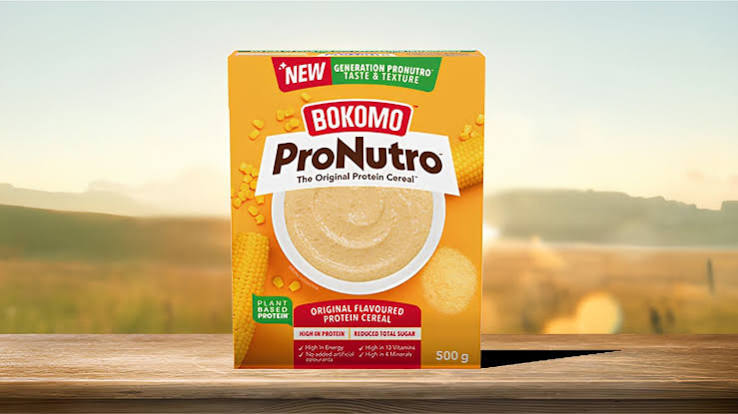
ProNutro discontinued in South Africa is the latest development in the story of one of the country’s most recognisable cereal brands, bringing an end to 64 years on South African store shelves.
PepsiCo, the owner of the ProNutro brand in South Africa, has confirmed that the cereal will be discontinued following months of consumer criticism surrounding a new formulation introduced earlier in 2026.
For a brand that has been part of South African households since 1962, ProNutro discontinued in South Africa is more than a product announcement. It marks the end of a major chapter in the country’s food and FMCG history, while highlighting the complicated relationship between heritage, innovation and consumer expectations.
Why Was ProNutro Discontinued in South Africa?
The decision to discontinue ProNutro in South Africa follows months of consumer complaints about the cereal’s new formulation.
According to PepsiCo’s customer care services, consumers said the new product experience was different from what they expected, particularly in terms of taste, texture and mixability.
The company said it explored options to bring back the original product experience but was ultimately unable to recreate the taste and texture consumers associated with the original ProNutro.
As a result, PepsiCo made the decision to discontinue the product rather than continue with a formulation that had generated significant consumer dissatisfaction.
The announcement makes ProNutro discontinued in South Africa one of the most notable recent developments involving a long-established South African food brand.
ProNutro Discontinued in South Africa After Consumer Backlash
The road to ProNutro discontinued in South Africa began earlier in 2026, when shoppers discovered a new-generation formulation of the cereal on supermarket shelves.
Consumers quickly took to social media to complain about changes to the product, particularly its taste and texture.
The backlash showed just how familiar South Africans had become with the original ProNutro experience.
For decades, consumers had developed expectations around how the cereal should taste, feel and mix. When those characteristics changed, the reaction demonstrated that the product’s identity was closely connected to its familiar formulation.
PepsiCo subsequently acknowledged the feedback and explained that older equipment used in the manufacturing process had become outdated and increasingly unreliable.
The company said replacing the equipment was necessary because the older machinery could affect product quality over time.
However, the manufacturing change also resulted in a product experience that many consumers did not recognise as the ProNutro they had known for years.
What Happened Before ProNutro Was Discontinued in South Africa?
Before ProNutro was discontinued in South Africa, PepsiCo attempted to respond to consumer feedback surrounding the new formulation.
The company acknowledged concerns about the cereal’s texture and mixability and said it would continue working on the product.
However, PepsiCo also indicated that the old ProNutro formulation would not be returning.
That created a difficult position for a heritage brand: the original product consumers wanted could not be recreated, while the new product was facing resistance from a significant section of its existing audience.
Retailers subsequently began reporting low stock, while some consumers were told that production had been halted and that the cereal would not be available for the remainder of 2026.
The latest announcement confirms that the situation has moved beyond a temporary production interruption.
ProNutro discontinued in South Africa is now the company’s confirmed direction for the brand.
ProNutro Discontinued in South Africa After 64 Years
ProNutro’s history makes the discontinuation particularly significant.
The cereal was introduced to South African consumers in 1962, giving the brand a 64-year presence in the country’s food market.
Over its history, ProNutro became known for its nutritional positioning and high-protein cereal offering.
The brand was developed during a period when South Africa was dealing with significant protein deficiency and malnutrition concerns, and it was positioned as a cereal offering nutritional benefits beyond basic breakfast consumption.
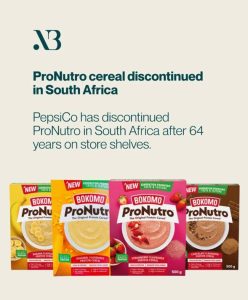
Over the decades, ProNutro expanded its range beyond the original product, introducing flavours including chocolate, banana and strawberry.
Some varieties eventually disappeared, including wholewheat honey melt and honey, while the core ProNutro identity remained familiar to generations of consumers.
The fact that ProNutro discontinued in South Africa after more than six decades illustrates how dramatically consumer relationships with heritage brands can change when a familiar product experience disappears.
Why ProNutro Matters for Heritage Brands
The ProNutro discontinued in South Africa story is also a story about heritage branding.
For a newer product, changing a formulation may simply be viewed as product development.
For a brand that has existed for 64 years, however, consumers can develop a much deeper relationship with the product.
Taste, texture, packaging and even the way a product is prepared can become part of a consumer’s memory.
That creates a unique challenge for heritage brands.
Consumers may expect brands to innovate, but they may also expect the core experience they have known for years to remain recognisable.
In the case of ProNutro, the reaction to the new formulation showed how difficult that balance can be.
Why Changing Familiar Products Can Put Heritage Brands at Risk
The decision behind ProNutro discontinued in South Africa highlights an important consideration for established brands: not every element of a product is viewed by consumers as replaceable.
Companies regularly update manufacturing processes, packaging, recipes and technology.
From a business perspective, these changes can make sense.
But consumers do not always experience those changes from the same perspective.
For someone who has eaten the same cereal for years, a change in taste or texture can fundamentally alter the product they know.
This is particularly important for heritage brands because familiarity itself can become part of their value.
The ProNutro story therefore raises an important question for marketers: when does innovation improve a heritage brand, and when does changing the product risk breaking the relationship consumers have built with it?
The Heritage Behind ProNutro Discontinued in South Africa
The history behind ProNutro discontinued in South Africa helps explain why the announcement has attracted so much attention.
A 64-year-old brand has had the opportunity to become part of several generations’ everyday routines.
There are South Africans who encountered ProNutro during childhood and later continued buying it as adults.
That type of generational familiarity is difficult to create through advertising alone.
It is built over years of repeated experiences.
This is one reason heritage brands occupy an important position in South Africa’s consumer landscape.
They can become connected not only to products, but also to memories, family routines and cultural moments.
What ProNutro Discontinued in South Africa Means for the Brand’s Legacy
Although ProNutro discontinued in South Africa marks the end of the product’s current journey on local shelves, it does not erase the brand’s 64-year legacy.
ProNutro remains part of the history of South African FMCG and of the country’s long relationship with nutritional breakfast products.
Its story also demonstrates the strength of consumer attachment to familiar brands.
The response to the new formulation showed that consumers were willing to speak openly when they believed a product had moved too far away from the experience they knew.
For marketers, that is an important lesson.
A brand’s history can be one of its greatest assets, but that history can also create very high expectations.
ProNutro Discontinued in South Africa: A Lesson in Brand Heritage
Ultimately, ProNutro discontinued in South Africa is not simply a story about a cereal disappearing from supermarket shelves.
It is a story about what happens when manufacturing realities, product innovation and consumer expectations collide.
Heritage brands must evolve if they want to remain relevant, but they also need to understand which parts of their identity consumers consider fundamental.
For ProNutro, the taste and texture associated with the original product had become part of that identity.
When PepsiCo was unable to recreate that experience, the company ultimately chose to discontinue the cereal rather than continue with a version that had failed to meet consumer expectations.
For South Africa’s marketing and branding industry, the story provides another example of why heritage matters.
The End of an Era for ProNutro in South Africa
The announcement that ProNutro discontinued in South Africa brings an end to a 64-year chapter for the iconic cereal.
From its introduction in 1962 to its expansion into different flavours and its place in generations of South African breakfast routines, ProNutro became much more than another product on supermarket shelves.
Its disappearance is therefore likely to be remembered not only as the discontinuation of a cereal, but as the end of a familiar part of South African consumer culture.
The ProNutro story leaves behind a clear reminder for brands building long-term legacies: when consumers have grown up with a product, the product itself can become part of the brand’s heritage.
And once that happens, changing the experience can change far more than what is inside the box.
ProNutro’s story highlights the challenge heritage brands face as consumer expectations change. As explored in Pat on Brands’ Why Local Heritage Brands Continue to Thrive, familiarity and trust can shape strong connections across generations. For the full background on ProNutro’s discontinuation, see the original BusinessTech report covering PepsiCo’s decision.